As with my #Come30 presentation in August 2024, I’ve created a twenty-minute video presentation for the #Shhh30 virtual symposium happening this weekend. I am over the purple moon to be talking about The Gold Experience, the album and the era. These were my undergraduate years, fall 1992 – spring 1996, and yes, 0(+> taught me several courses’ worth of knowledge and wisdom. In a way this presentation is about me paying it back, and paying it forward.
My talk is properly titled “Three Epiphanies, & Several More Notes About How the Exodus Began, a.k.a., The Gold Experience Era & Me.” This is the abstract: “The Gold Experience was the culmination and climax of Prince’s struggles in the Nineties, especially his contract dispute with Warner Bros., but the album also dramatizes the togetherness and innovation that lit the way forward. This presentation discusses three epiphanies: what Prince experienced, the epiphanies he dramatizes on The Gold Experience and other music of this era, and finally, the new understanding I found in this album and what came before it. As such, this presentation weaves together subjects I’ve been presenting on for the past several years, from racial capitalism and the so-called problem of abundance to Prince’s respect for history, his love for Minneapolis and the Black working class that raised him, and his never-ending desire for a higher level of knowledge.”
I was rushing to get the video finished in time, and I’m not particularly good at making credits sequences in Adobe Premiere, so like last year, I’ve created this annotated bibliography. For the students out there, this is not a proper Works Cited in MLA format, etc., though I am trying to be complete and ethical.
Sources are listed in the order in which they appear.
****
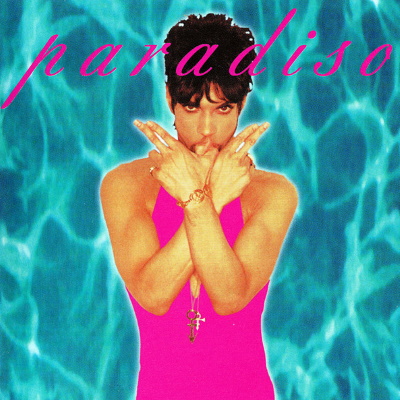
“People Get Ready,” Brussels, Belgium, at the Vorst Nationaal (Forest National), March 28, 1995. Credit to uploader shiValsky. Prince Vault show link w/set list. Like the show at the Paradiso in Amsterdam a night earlier, this show began with a verse of “People Get Ready” that segued into Graham Central Station’s “The Jam,” a funk workout that showcased each member of the NPG. For a while I thought this set opener was more common than it actually was. I first heard this on the bootleg pictured below, Paradiso.
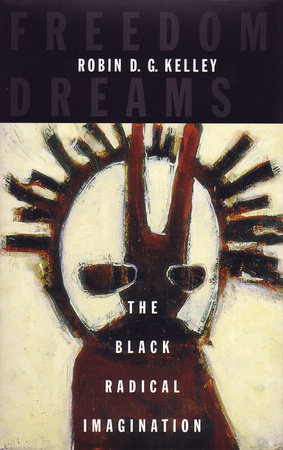
Robin D.G. Kelley, quote from Freedom Dreams, a contemporary classic about the Black radical tradition, which I think Prince should be considered part of:
“When movements have been unable to clear the clouds, it has been the poets–no matter the medium–who have succeeded in imagining the color of the sky.”

Curtis Mayfield (1942-1999). The photo is by Norman Seeff, a pretty legendary music photographer. The pic itself is from the official Curtis Mayfield site. Hopefully I’ve corrected the slide by the time my presentation airs, but if not, the issue was the type was too blurry on the photo for me to read. Mayfield founded Curtom Records with Eddie Thomas in 1968 in Chicago. It was distributed mostly by Warner Bros. Records and closed in 1980.
“Standing the Tests of Time,” BET, aired 1995 or 1996? This is a superb interview between Mayfield and Donnie Simpson, the deejay and TV host. Not to be confused with “Darker Than Blue,” another great short video interview with Mayfield from 1995, which you can find here.
“Endorphinmachine,” Nulle Part Ailleurs (Nowhere Else), French TV show, May 5, 1994. Rehearsals here. Credit to uploaders 319 and Paisley Park. Similar vibe as the Top of the Pops performance that was used for the official “Endorphinmachine” video used in the Interactive CD-ROM (here) though not as slow.
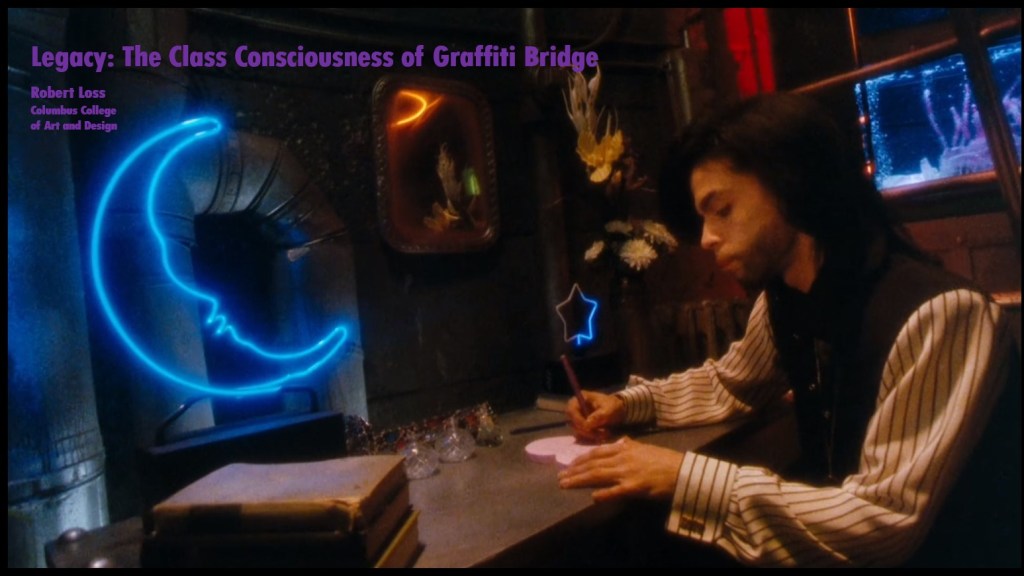
Still from Graffiti Bridge, dir. by Prince (shout-out to Craig Rice!). My “Legacy” presentation can be found here, and all of my presentations are on the incredible De Angela Duff‘s polishedsolid channel here.
The Beautiful Experience, 1994, dir. by O(+>. Aired in the UK on Sky One and in Japan. According to Prince Vault, the 1-800-New Funk website released “white label” VHS versions of this and The Sacrifice of Victor. See my notes below on the bootleg copy I bought. A super deluxe treatment of The Gold Experience has to include this short film along with The Undertaker. ESTATE: HIT ME UP.
The Contract (slide from my #Come30 presentation “The Problem of Abundance.” Mostly I want to note one of the sources from this slide:
Phillips, Chuck. “Just How Princely Is Prince’s Deal?: Pop music: The Star’s New Warner Bros. Pact Is One of the Industry’s Biggest Ever, but Insiders Question Its Purported $100-million Value.” Los Angeles Times. Sept. 5, 1992. (Link)
Soul Train, 1994 episode, hosted by Holly Robinson. O(+> took over the episode and performed (mostly lip-synched to) “The Most Beautiful Girl in the World,” “Now,” “Acknowledge Me,” and “Lovesign.” Prince Vault has this being taped in April 1994. Holly Robinson thanks him for “introducing four new experiences here,” which means this might have been The Artist’s introduction of the term “experience” for his work of this time.
“Epiphany,” Merriam Webster. I only included this because I make a minor gaffe in the narration of my presentation, saying that this refers to the manifestation of Christ to the Magi. That’s slightly inaccurate: the Magi were the manifestation, and it was to the Gentiles.
(Prince having a sheet placed over him) The Sacrifice of Victor (aired 1993 on MTV, released 1995 by Warner Music Vision). Dir. by Parris Patton. The footage begins with Prince’s show at Wembley Arena on Sept. 7, 1993. At the end of that concert, two of the Game Boyz dancers put the sheet over Prince and carried him off, symbolizing the “death” of Prince. That night’s aftershow occurred at Bagley’s Warehouse in London and is the focus of the VHS.
“Dolphin” on Late Night with David Letterman, Ed Sullivan Theater. I wrote about this appearance in my “How the Exodus Began” article in Black Magnolias. I didn’t catch on to the subtext of Letterman’s derision, though it’s sometimes tough to say what was thought to be for entertainment and what was his genuine reaction. But in retrospect, I find this difficult to watch. Prince Vault dates this taping on December 13, 1994, meaning it would’ve aired that same night (though technically after midnight, so Dec. 14).
“Santana Medley,” Glam Slam Miami Beach, June 10, 1994. This footage is incredible, and if a live show were to be included in a Gold Experience super-deluxe, I would vote for as much of this three-night stand as possible. It’s the epitome of Prince and the New Power Generation’s robust funk/soul/rock thump & grind of the time. The songs of the medley are: “Jungle Strut,” “Batuka,” “Soul Sacrifice,” and “Toussaint L’Overture.” Those are from Santana (1969) and Santana III (1971). Whenever anyone talks about Prince’s guitar playing and stops at Jimi Hendrix, I want to scream. This is a good example of how Prince’s tone and style were influenced heavily by Carlos Santana’s, to the extent I would include him on a list of Prince’s top influences. (James Brown, Sly & the Family Stone, Santana, Hendrix, Stevie Wonder, Joni Mitchell, and George Clinton/P-Funk have to be the top 7 in no particular order.)
PR/magazines slide – These documents are floating around the internet and need better verification. This is a good example of a situation in which The Estate could help academics quite a bit. Additional images feature the covers of: Vibe, August 1994, article by Alan Light, and the UK magazine The Face with its headline, “Where did it all go wrong for The Artist Formerly Known as Slave?” However, the latter is from a 1997 interview by Ekow Eshun.
O(+> statement and geneology documents – May the old gods and the new bless Anil Dash for saving and posting the Prince statement as TAFKAP explaining in plain language what had been going on up to that point in February 1996. The geneological documents come from the work of Kristen Zschomler, a historian in Minneapolis, to preserve Prince’s legacy dwellings in Minneapolis. Her research pointed to this site, which provides useful info. Many many thanks to Kristen for her extensive work.
Robinson, Cedric. Black Marxism: The Making of the Black Radical Tradition. Zed Books, 1983.
Photo of Prince in handcuffs. Credit: Dana Lixenberg. First appeared in Vibe, August 1994.
Geographies of Racial Capitalism with Ruth Wilson Gilmore, dir. by Kenton Card, Antipode Foundation (2020).
Zaheer Ali, “Slave 2 the System: Prince’s Labor Activism and the Black Radical Tradition” presentation (2017) is must-watch. It’s important to understand this in regards to the entire continuity of Prince’s career and life, a philosophy he developed and that evolved into the 2010’s.
“We March,” The Gold Experience (1995). This was recorded in May-June 1994, according to PrinceVault.com. There seems to be some debate about whether or not Prince wrote this song for the Million Man March on Washington. That event took place in October 1995, so it’s certainly possible in terms of the time-frame. But that link on Prince Vault includes a Q&A that would seem to show Prince saying he didn’t write it for the event. So this might be another small error in my presentation. In any case, the song is important in Prince’s body of work.

915 Logan Ave. North, photo taken by the author Sept 8, 2024. This was the site of the first house John L. Nelson and Mattie Della Shaw bought together in 1959. Prince lived here from approximately seven months old to 6 years old (so, 1964). Before his seventh birthday in June 1965, they moved to the 2620 Eight Avenue North. This is not the original house. I wanted to connect “We March” and its concerns about home ownership and access to clean water to Prince’s life. This picture was taken during a personal MPLS Prince tour that Kristen Zschomler provided for me and my wife during our trip. It was incredible, and once again, my deepest thanks to Kristen for her generosity and hard work.
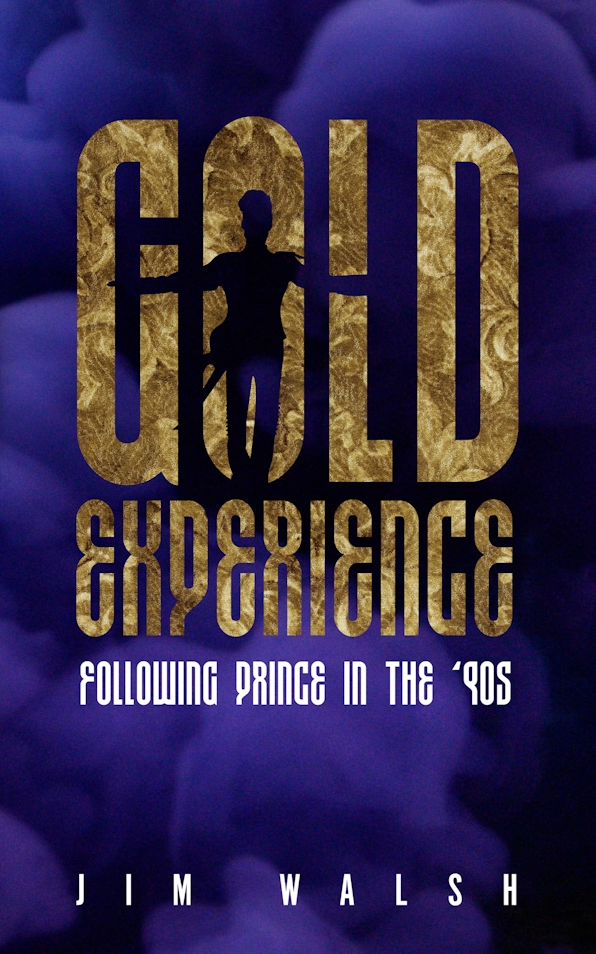
Jim Walsh, Gold Experience (University of Minnesota Press, 2017) / The Gold Experience liner notes (1994). Walsh’s book is an invaluable documentation of Prince from a local perspective circa 1994 into the early 2000s. Walsh writes with detail and critical enthusiasm. I only wish Jim had started earlier on the Prince beat for the St. Paul Pioneer Press.
North and South Minneapolis slide: The John L. Nelson pic comes from The Beautiful Ones, Prince’s memoir published in 2019. The picture of Mattie Della Shaw Baker, Prince’s mother, is from a source I can’t find. Spike Moss’ photo is from the Minneapolis Star-Tribune and credited to Tom Sweeney. The map of Louisiana is a screengrab from Kristen Zschlomer’s report on Prince’s history; the image is titled “Figure 2. Webster, Bienville, and Lincoln Parishes, Louisiana, where Prince’s grandparents were born” and cites Geology.com (2018).
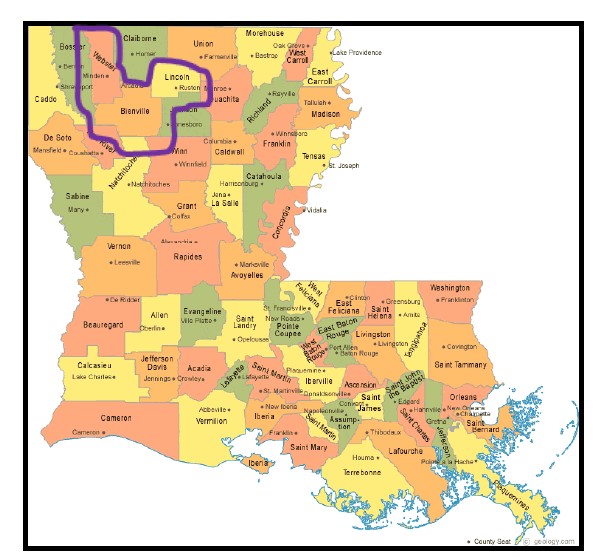
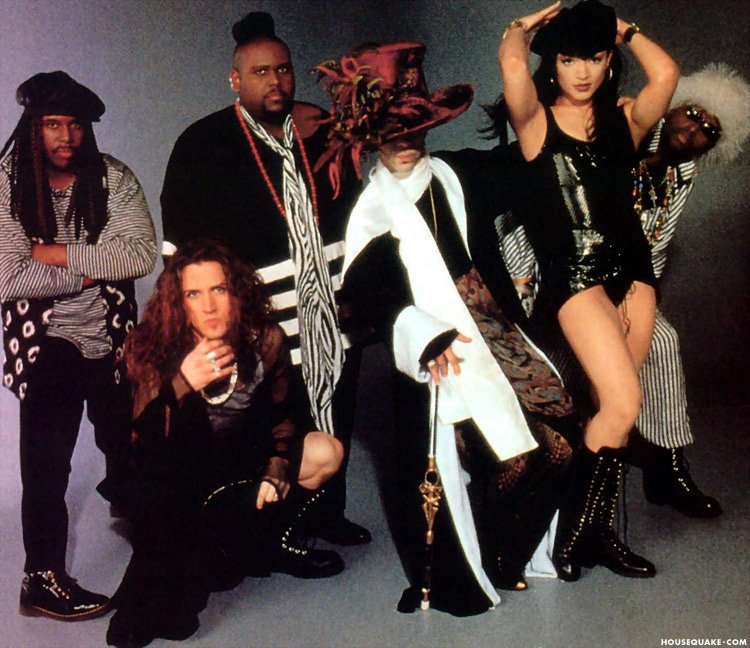
Photo of the New Power Generation (c. 1994-95). I’m unable to find a credit for this photo. For any new folks, the NPG was (l. to r. above) Sonny Thompson (bass), Tommy Barbarella (keys), Michael Bland (drums), Prince / O(+> (anything), Mayte Garcia (dancer, backing vox), and Morris Hayes (keys). Prince changed the band up before February 1996, when he married Garcia, but all of the members worked with Prince off and on in the ensuing years. Hands down this is my favorite band of Prince’s, much like I say The Gold Experience is my favorite album for when/where it was in my life. However, I could make the case that this version of the NPG had the most personality, more than any other band except The Revolution. Everyone was featured a little more than the folks in the “No Name Band” from Sign O’ the Times/Lovesexy. The loud and eclectic look was very 1990s, a callback to late 60s/early 70s fashions with a touch of glam elements.
Back to The Beautiful Experience, “Interactive.” This track was recorded in the studio in 1993. The Beautiful Experience concert footage was filmed in the early morning hours of February 13, 1994, which was the NBA All-Star Weekend. Many luminaries were at the show, which is discussed in Jim Walsh’s book above. The video here is the entire concert audio. I had a cassette of this and played it nonstop. ESTATE: Hit me up, I have ideas.
“Race” (1994). This appears in The Beautiful Experience (1994), and is credited to Prince as director. It’s possible it was directed by Parris Patton, who directed the sequences in the film with Nona Gaye.
“The Ride,” The Undertaker, directed by Paris Patton (1995). There’s some confusion or contradiction about when this was filmed. The sections with Vanessa Marcil were shot separately, and it’s possible (according to PrinceVault, it’s likely) they were intended for a different project, maybe one that included Nona Gaye. Michael Bland has said the session occurred over the Christmas holidays in 1993. Anyway, the stripped-down power trio of O(+>, Bland, and Sonny Thompson on bass gives The Artist room to stretch out his guitar playing, and oh my knees, it’s what I imagine standing next to a blowtorch is like.
“The Most Beautiful Girl In the World” music video, dir. by Antoine Fuqua (1995). Fuqua had not yet made his directorial debut with The Replacement Killers; he would go on to direct The Equalizer films with Denzel Washington.
Bootlegs – I almost made this presentation entirely about Prince’s bootlegs during this time and how important they were to understanding what O(+> was doing.
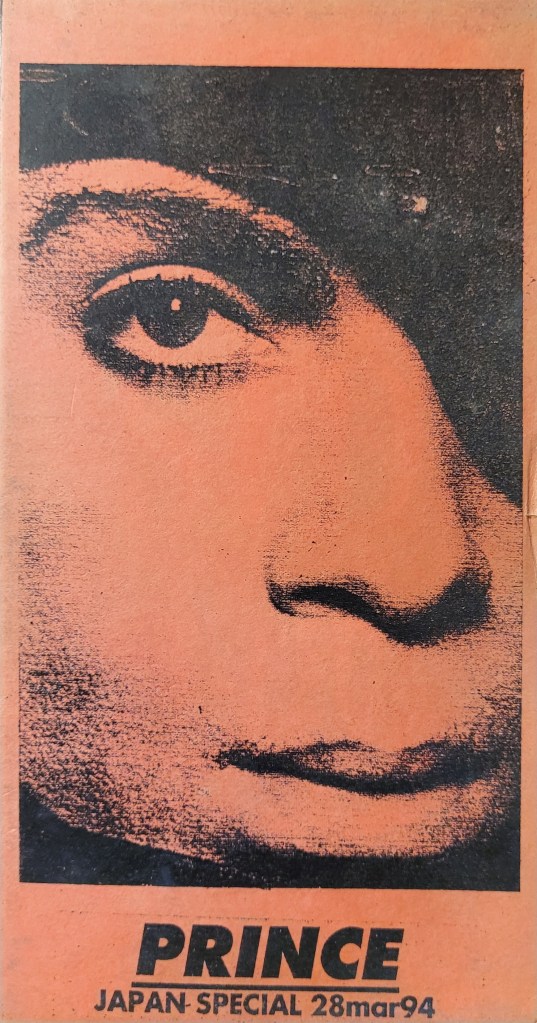

“Lovesign” performance on Soul Train, 1994. The above is cued to it, the last of the four songs he performed.
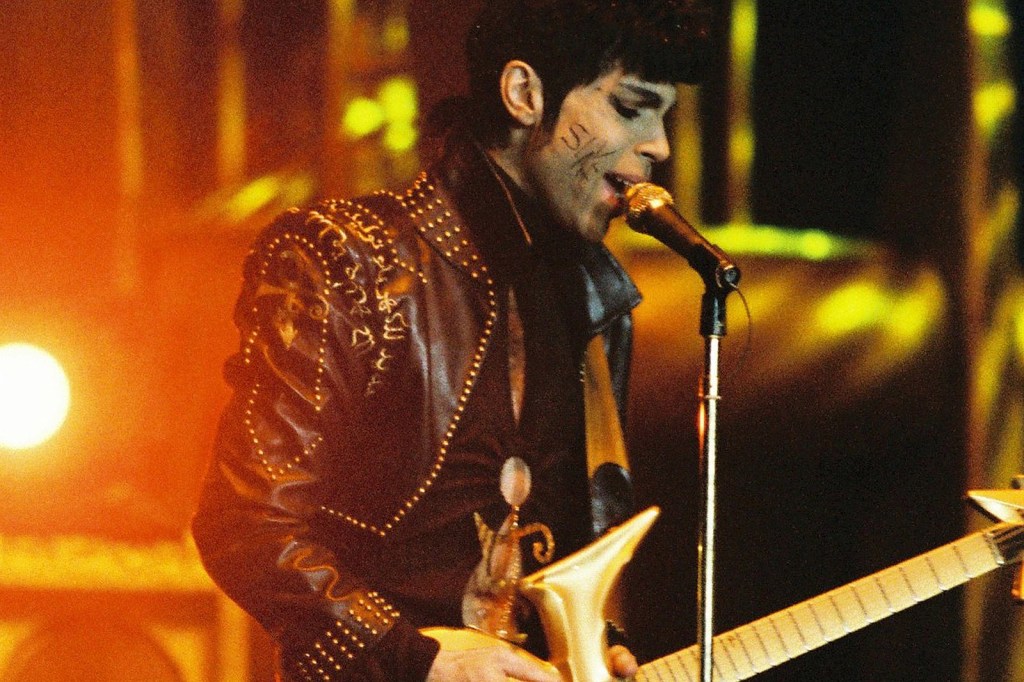
I want this jacket. Credited to Pete Still for Getty Images.
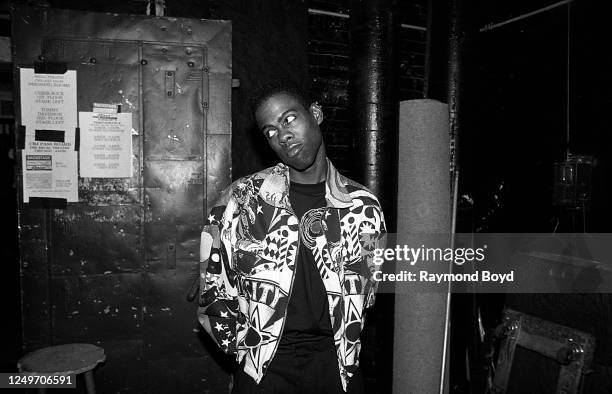
Chris Rock. That caption came with the photo. Important to note that April 1993–likely the month he performed with Sandler at Ohio Wesleyan–was just after CB4 came out. His first comedy album, Born Suspect, came out in 1991.
Rev. Dr. Harold E. Pinkston—Here’s a letter he wrote to his former roommate, included in Stanford’s Martin Luther King collection.

C.T. Vivian, Black Power and the American Myth (1970), reprint by Fortress Press, 2021. I can see the small space in which Vivian gave his talk but I’m not sure if it was the Black Culture house or not. (OWU had special living units, houses that weren’t fraternities or sororities and that you had to apply to live in.) I also have an image of an autumn sidewalk at night. However, I have yet to find any documentation of his visit online.
Lerone Bennett Jr., Before the Mayflower (first edition 1962, updated frequently) and Forced into Glory (2000). The latter has a dubious reputation for numerous errors and quotes taken out of context, but its perspective did help force a more realistic accounting of Abraham Lincoln’s evolving views on race. He wasn’t the “Great Emancipator” until he reluctantly was. That, I think, is incontrovertible. Lincoln definitely held white supremacist views for most of his life. Eric Foner’s critique of Forced into Glory is a useful read. This subject remains on my to-do list and will be an important part of my book on Prince.
Greg Tate, Everything But the Burden, Penguin Random House, 2003. Tate’s the editor of this volume of essays by folks like Vernon Reid, Hilton Als, Beth Coleman, Robin Kelley, and many more. Tate’s introduction is titled “Nigs ‘R Us,” and characteristically for Tate, drills down to the issue viscerally with wisdom and wit.
Quick medley of sources here in the presentation–back to the Soul Train performance, the “MBGITW” video, and then the “Gold” video (top) and the American Music Awards where O(+> pops up seemingly out of nowhere to perform “Billy Jack Bitch” (then “Eye Hate U” and “319”). If you’re into this era of Prince’s music, the good news is that you can find tons of televised performances, whether it’s late night shows, awards shows, or the films like The Beautiful Experience and The Undertaker, or even the VH1 Special Love 4 One Another from January 1996. Back then you had to be disciplined to record all this on VCR if you had cable, otherwise you were trading for or buying bootleg VHS tapes.
“Count the Days,” Exodus, New Power Generation (1995). This is an important song and important video, emblematic of Prince / O(+>’s bolder messaging about his Blackness and the experiences and history of Black folks. This video and the one for “The Good Life” are great for featuring Sonny Thompson so much, too.
“319,” Glam Slam Miami Beach, June 10, 1994. Back to this show, in which “319” follows the “Santana Medley.” (Clip is cued to beginning of the song.) It’s great to hear a fully live, non-lip-synched version of this song.
 Robert Loss