I’m presenting at the #Come30 online symposium tomorrow morning but won’t have had a chance to add the Works Cited for my presentation before it’s shown. Plus, there are a lot of sources to credit. So here we go. I’ll list some in the traditional way where appropriate but also share the original sources for the video I used.
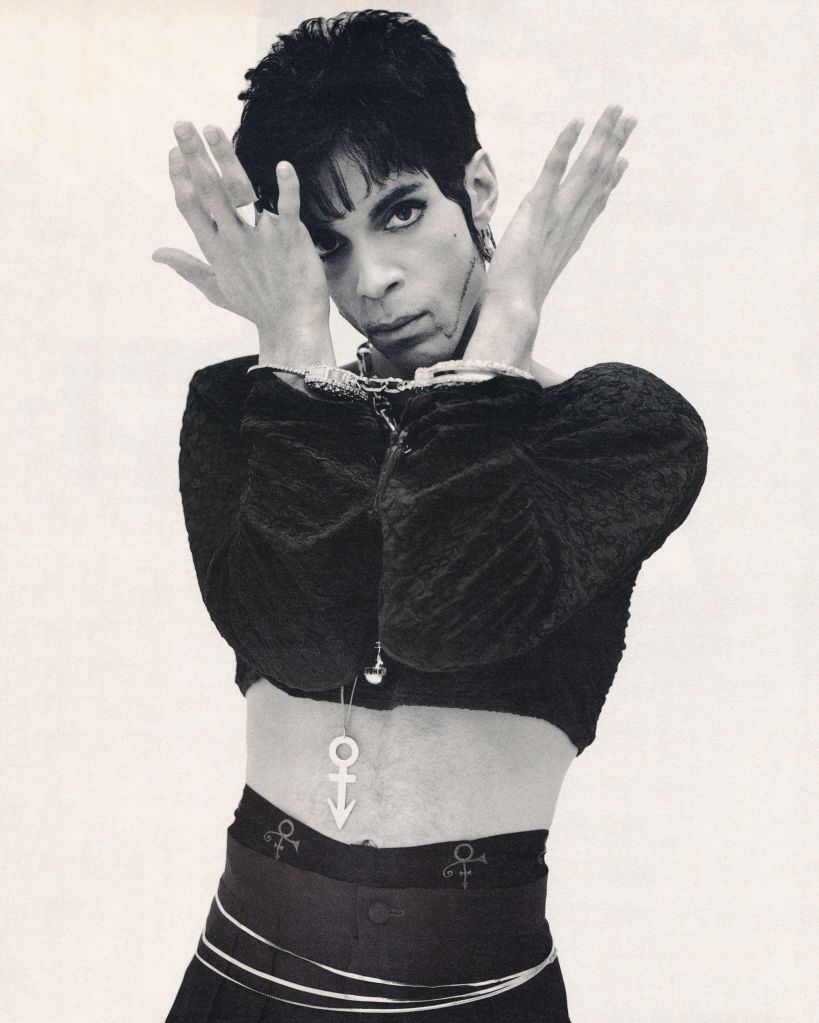
When/if the video of my presentation is available, I’ll share it, but the talk focuses on the events leading to and surrounding the production of Come in terms of Prince’s dispute with Warner Bros. I spend time discussing racial capitalism and human capital, and why Prince’s prolific nature was supposedly a problem for the record industry.
Sources are listed in their order of appearance in the presentation.
Frank Zappa, Zoot Allures – Live at the Pier (1984).
Passman, Donald. All You Need to Know About the Music Business: Revised and Updated. 6th Edition. Simon & Schuster/Free Press: 2006.
Phillips, Chuck. “A King’s Ransom for Prince: Artist Signs Record $100-Million Contract With Warner.” Los Angeles Times. Sept. 4, 1992.
Slave Trade (2014). Director: Elio Espana.
Phillips, Chuck. “Just How Princely Is Prince’s Deal?: Pop music: The Star’s New Warner Bros. Pact Is One of the Industry’s Biggest Ever, but Insiders Question Its Purported $100-million Value.” Los Angeles Times. Sept. 5, 1992. (Link)
Goodman, Fred. “A Man of Many Talents (and $100 Million?)”. New York Times. November 1, 1992. (Link)
This article collects a number of contemporary articles about Prince’s new contract. Thank to C. Liegh McInnis for sharing it with me.
A NOTE ON THE MATH – As I say in the presentation, the math included here is “responsible speculation.” Since I don’t have Prince’s 1992 Warner Bros. contract extension, I can only make reasonable estimates. I used Passman’s book (listed above) partly because it’s a 2006 edition; cross-checking it with other sources (especially the one below) helped me figure out the math. That said, if, for instance, Prince’s royalties were based on retail price–which was rare, but did happen–then the figures are entirely wrong. Though the ratios are not.
Strauss, Neil. “Pennies That Add Up to $16.98: Why CD’s Cost So Much.” The New York Times, July 5, 1995. (Link) Provides a detailed answer to the question and offers information that’s contemporary with the Come era. It uses the journey of Rod Stewart’s 1995 album A Spanner in the Works released by…Warner Bros. (It includes a cover of Tom Waits’ “Hang on St. Christopher” that is very comfy.)
Holiday, Billie. Lady Sings the Blues. With William Duffy. Doubleday, 1956.
Robinson, Cedric. Black Marxism: The Making of the Black Radical Tradition. Zed Books, 1983.
An Antipode Foundation film directed by Kenton Card

 Robert Loss